REPORT
Are Kneeling Chairs Really Good for You?
Experts Weigh In on the Science Behind Sitting on Kneeling Chair. Here’s what experts say about kneeling chairs.

If you are constantly working overtime, desk-bound, hunched over your computer and endless paperwork, you are well advised to consider using an ergonomic kneeling chair.
This innovative chair can help you with maintaining a good sitting posture, better spine health, reducing aches and pains, thereby enhancing alertness and increased productivity. You’ll leave at the end of the day feeling better and lose the pains associated with traditional chairs.

You have seen kneeling chairs online, as well as in shops and offices. Your friends may have purchased one. You have heard that a posture chair is good for lower back pain.
Maybe you are thinking about buying one and you ask yourself:
”What are the pros and cons of a kneeling office chair, and is it suitable for me?”

How Kneeling Chairs Work
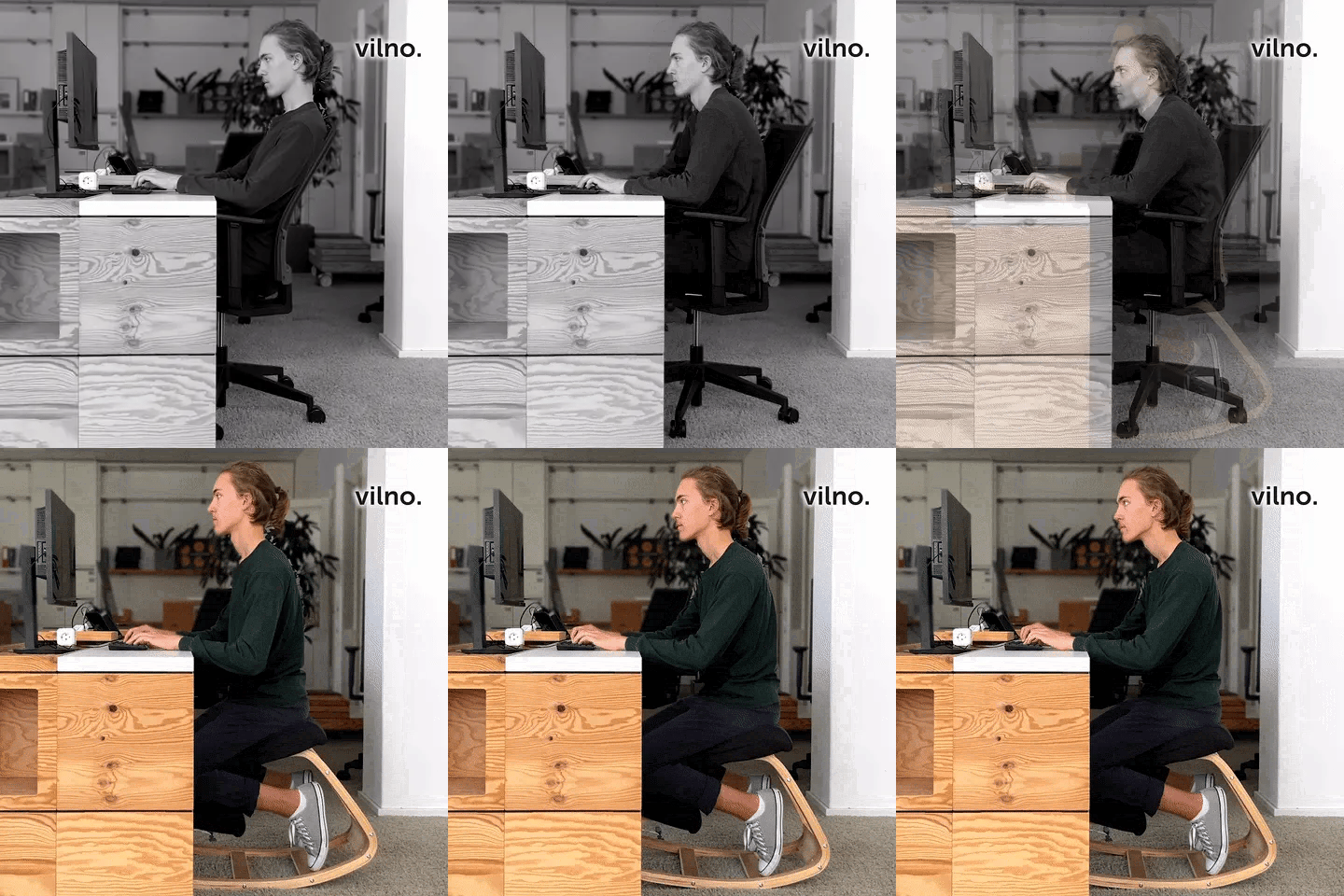
When you sit in a conventional chair, your pelvis rotates backward, flattening the lumbar curve and stressing the lower back. The principle of a kneeling chair is different:
- 80% of your weight stays on your buttocks; the knee pad is only there to prevent sliding.
- The key is an “open pelvis” position, where the hips and spine form about a 120° angle.
- This posture can reduce lumbar disc pressure by up to 65% compared to the traditional 90° sitting angle.


What happens to the body when we sit?
As we sit down completely, the ligaments attaching the femurs to the pelvis pull on the back of the pelvis, rotating it backwards through the remaining 30° and this causes a flattening of the lumbar curve.
Principle of a kneeling chair
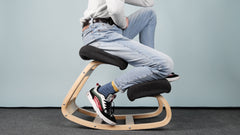
The name “kneeling chair” can be a little misleading as it leads you to believe that your knees are taking the bulk of your weight and replacing the function of your buttocks. This actually isn’t the case. Your buttocks will still carry about 80% of your weight, and the knee pad is only there to act as a support so you do not slide off the inclined seat.
The underlying principle of a posture chair is to maintain an‘open’pelvis while you are sitting. This reduces the strain in your lower back that normally occurs when you sit on a conventional chair. An‘open’pelvis is when the angle between your spine and thighs is at least 120°.
By opening the pelvis and lowering the knees in relation to the hips to create a 120° back-thigh angle, the disc pressure in the lumbar region of the spine is reduced by up to 65%when compared to sitting in the traditional 90° back-thigh angle position.
Benefits of a Kneeling office chair – the PROS
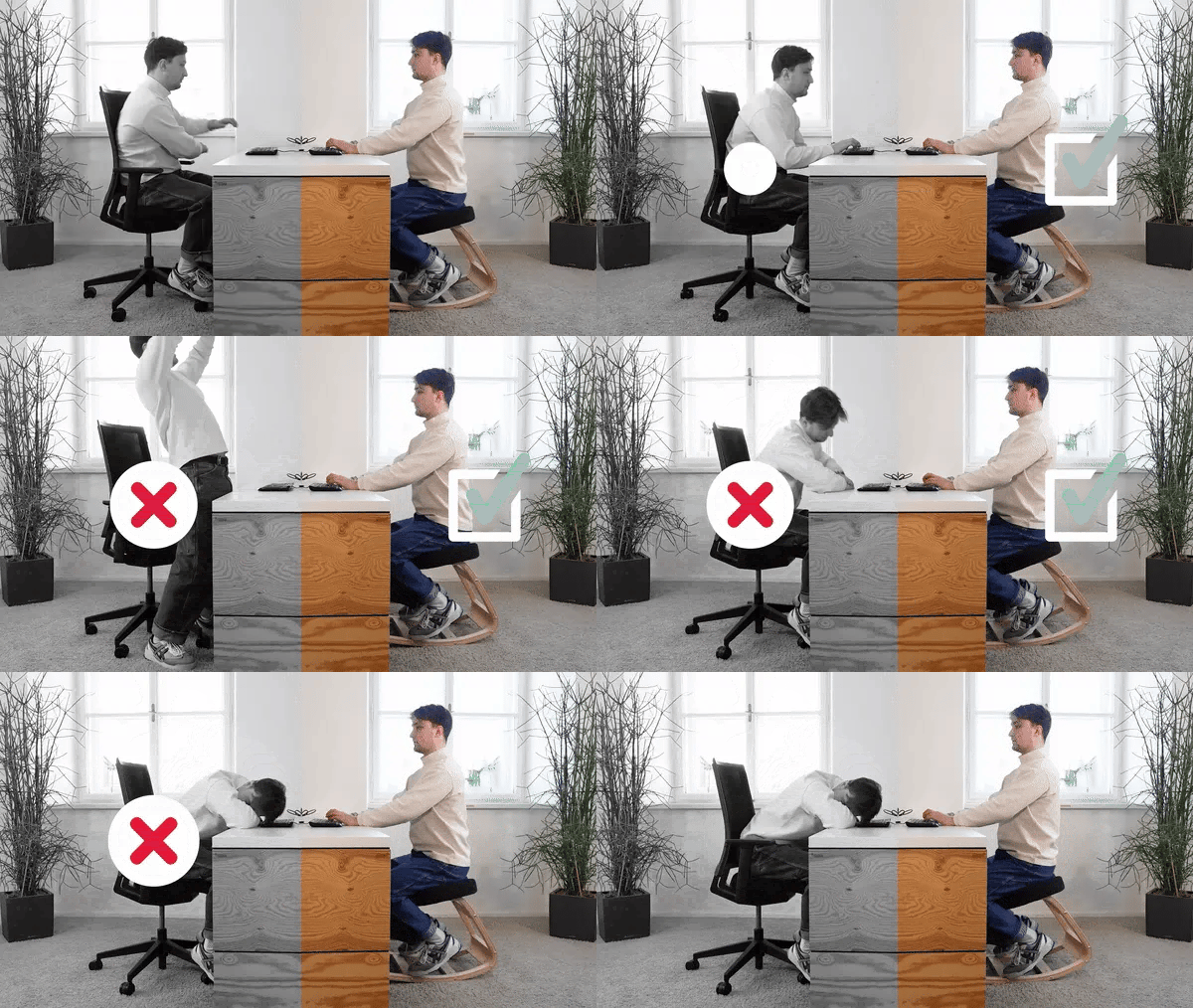
Kneeling chairs are linked with several health and productivity benefits:
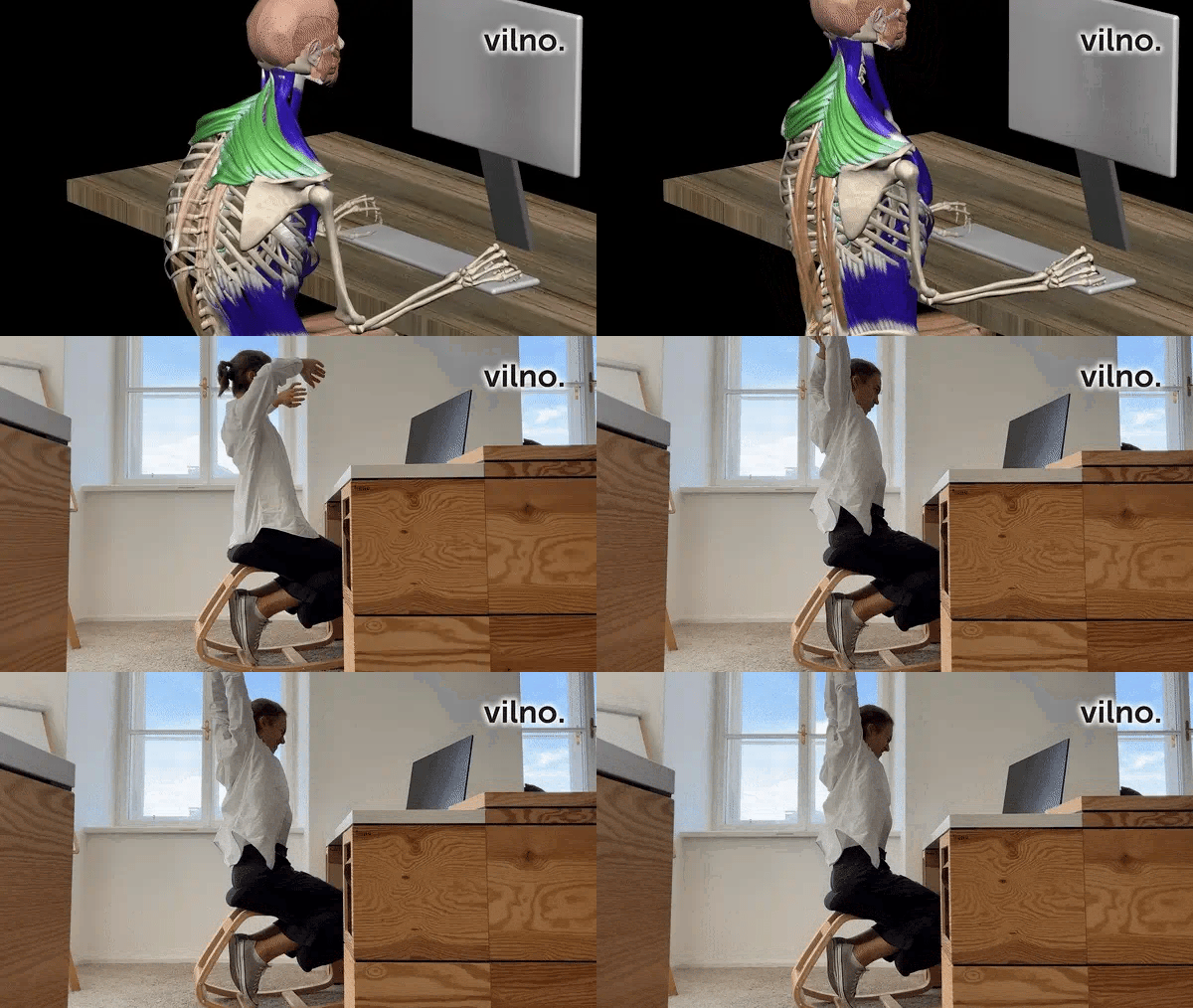
1.Improved spinal alignment with a natural S-curve, reducing lumbar pressure.
2. Relief from lower back pain by decreasing compression.
3. Better breathing and digestion due to an open torso.
4. Core and back muscle engagement thanks to no backrest.
5. Improved circulation and oxygen flow, keeping energy levels high.
6. Less fatigue and greater focus, since proper posture supports productivity.

The Limitations (Cons)
To be fair, kneeling chairs are not perfect for everyone:
1. Discomfort can occur if posture is incorrect or padding is insufficient.
2. Awkward to get in and out of, especially around large work tables.
3. Not always ideal for all-day use; alternating with standing or traditional chairs is recommended.
What Our 10,000+ Customers Are Saying
“I thought kneeling chairs were some kind of medieval torture device. Turns out, my old office chair was the real torture. The Nobel feels weird for 10 minutes, then suddenly… no back pain. Magic.”


“Day one, my coworkers laughed at me. Day seven, two of them asked for the link. Day thirty, I forgot what back pain even felt like.”


Conclusion: Is It Worth It?
The evidence is clear: kneeling chairs promote healthier posture, reduce back pain, and restore energy. While no chair is perfect for every situation, a well-designed model can transform your workday comfort.The Nobel Chair by VILNO combines ergonomic science with real-world durability. For professionals who care about health, comfort, and productivity, it’s more than furniture—it’s an investment in long-term wellbeing.

love this chair a lot more than I thought I would based on some of the reviews. It was super easy to assemble. It naturally keeps your spine straight, sitting up easily. It's versatile so you don't have to sit in the exact position on your shins. You can also sit with your feet on the "knee pads", you can rock in it, cross your legs ... very versatile. It does take some getting used to - if you sit in the standard position (on your shins/pictured) for too long my shins do start to hurt (no knee pain!).